
Brewing a local workforce
A neighborhood project in northwest Iowa’s Storm Lake is teaching students business practices for a state that needs workers
By Fernanda Japa and Elisa Angeles Espinoza, The Tack
This story originally was published in Buena Vista University’s The Tack. Some editing was done here for a statewide presentation.
STORM LAKE, Iowa — The espresso machine hisses a steady exhale, cutting through the room as Monica David leans slightly over the counter, adjusting a student’s angle on the portafilter. “Turn it,” she says, her voice calm. The student follows, adjusting their position, before pausing to ask a question.
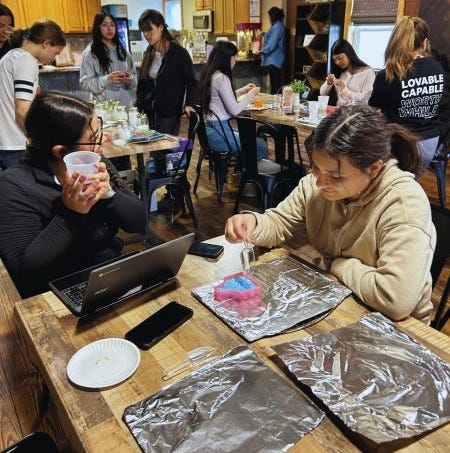
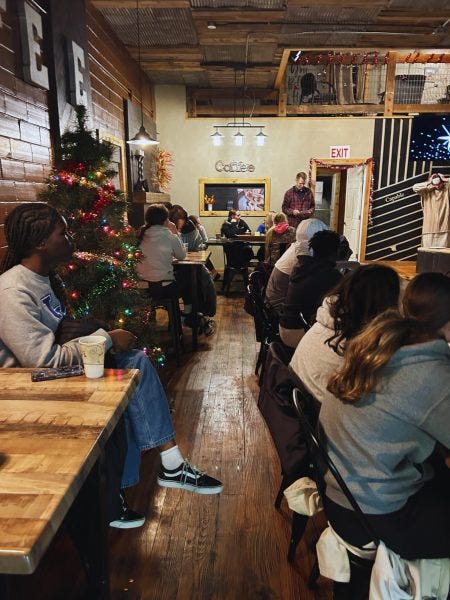
Around them, the Endless Sea Café moves with quiet purpose. A student closes a laptop filled with finished assignments. At a nearby table, conversations shift between English and Spanish.
David guides students through small decisions that may carry larger implications. Each correction is subtle, aimed at educating. Its core values are Christian based.
What happens here, at The Bridge of Storm Lake’s café, is not simply service work — it is early-stage workforce training in a community where the need for job-ready workers continues to outpace supply.
The Bridge is an “advocate for Storm Lake youth in vulnerable places of life by meeting them where they are, building a supportive community there and providing training toward a more hope-filled future,” its website says. It is for middle school, high school and college students.
“What made me keep coming back,” David recalled of her start at The Bridge of Storm Lake years ago, “was just its sense of community. It was something to do at a young age, and I felt like the people there really supported me.”
That feeling is not accidental. It’s by design.
CHANGING TOWN, CHANGING WORKFORCE
Storm Lake, a northwest Iowa city of roughly 11,269 residents, has become one of the state’s most diverse rural communities, where Hispanic residents make up about 41% of the population and Asian residents about 16%.
That diversity has helped stabilize population growth in a region when many rural Iowa towns are shrinking. But it has also exposed structural gaps — particularly in workforce development, education access and social integration.
Research on rural Iowa communities increasingly has pointed to the decline of social spaces as a hidden driver of those gaps. When places for informal gathering disappear — such as diners and bowling alleys — social isolation rises and networks of opportunity wear out.
A project led by Laurel Waterman, an intern at the Iowa State University Extension and Outreach in Perry, Iowa, found that these kinds of spaces are not amenities, but necessities. According to Waterman, such spaces function as a public health matter for social connection and mental health. They become “third spaces.”
Without them, rural towns struggle to retain young people and integrate new residents.
Izzie Ramos, The Bridge of Storm Lake’s operations director, understands this from the ground up. She started volunteering in 2016 as a teenager. “I just felt super loved and cared for,” Ramos said.
At the same time, Buena Vista County faces broader economic pressures. According to the Iowa Health and Human Services snapshot, about 12.2% of residents live in poverty, and more than a quarter of the population is under 18 — adding pressure on schools, employers, and community organizations to prepare the next generation of residents.
For local employers, the challenge is clear: how to build a skilled, connected workforce in a multilingual, rural environment where traditional training pipelines are often limited.
Ramos described what she sees in the young people who walk through the doors.
“If you don’t have an open mind, you assume middle schoolers are just angry and mean for the heck of it. But ultimately, it’s because that’s what they grew up in. A lot of our middle schoolers and high schoolers dealt with the pandemic. They were forced into isolation, and then onto social media, where vulnerability was shamed. They just feel so isolated and alone. …They’re seeking something — and they don’t know what they’re seeking.”
The café, she believes, offers an answer.
A café as a workforce pipeline
The Bridge of Storm Lake and its student-run Endless Sea Café were created as a response to overlapping challenges. Founded in 2009, The Bridge began as a youth outreach effort but evolved into a hybrid model combining mentorship, education, and job training. The Endless Sea Café opened in 2022.
Sociologists call places like this “third spaces” — social environments distinct from home (first) and work (second) that host the regular, voluntary, and informal gatherings of a community.
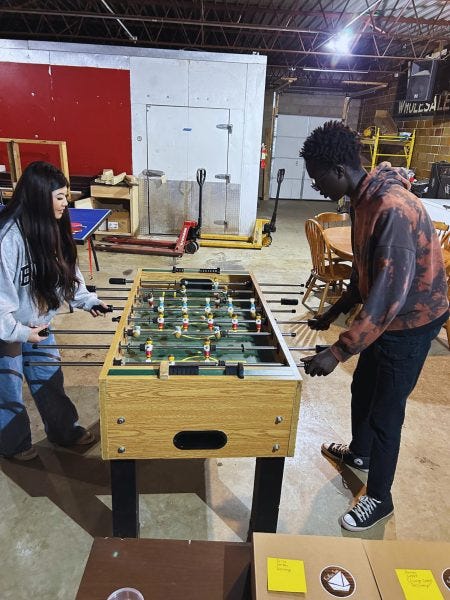
The Endless Sea was not an adult invention. “The cafe was an idea that stemmed from a survey we did for our high schoolers,” Ramos said. “They kept asking for a place to be safe, hang out, and have it be their own. We already roasted coffee, so we thought, this is a way to provide a space that has fun drinks. The purpose is to give kids a space to be.”
In addition to learning how to make coffee, students rotate through roles that mirror small business operations: inventory tracking, customer service, sales, marketing, and basic accounting. For many, it is their first exposure to structured employment.
READ THE ORIGINAL STORY FROM THE TACK
In a town where the mean income per capita is roughly $30,603, and where many families are navigating language barriers, early work experience can shape long-term earning potential.
Additionally, Ramos said, “When it’s busy, I think they learn time management. Not just customer service, but customer engagement.”
For the students, the benefit is immediate: soft skills, job readiness, and mentorship. For employers, it creates a local talent reservoir.
PARTNERSHIPS AS INFRASTRUCTURE
What distinguishes the model is the ecosystem around it.
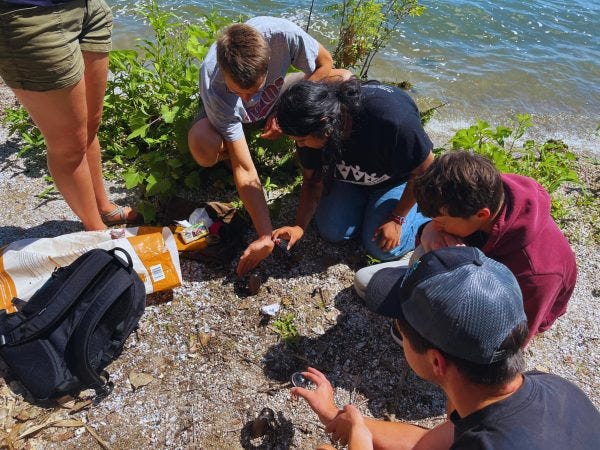
The Bridge program partners with Iowa State University Extension and Outreach, Buena Vista University, and various other organizations, giving students exposure to career exploration. These partnerships function as a bridge between secondary education and the regional labor market.
“During my senior year of high school, I did an internship here in the finance part of The Bridge,” David said. “I got to really see what goes on and what it takes to run a non-profit organization.”
Students also participate in service initiatives like assembling weekend food packages — known locally as “Tornado Sacks” — for elementary students facing food insecurity. While not a direct workforce intervention, the effort addresses a key barrier to long-term economic stability: consistent access to food and basic resources.
In effect, the program combines three interconnected interventions: hands-on workforce training through café operations, exposure to educational pathways through local partnerships, and a layer of social stability through mentorship and initiatives that address statewide needs.
That integrated model reflects a broader shift in workforce development across Iowa, where policymakers and employers increasingly recognize that building a reliable labor force requires more than technical skills alone.
With more than 61% of Iowans completing education or training beyond high school, the state has invested heavily in aligning education with workforce needs, but gaps remain — particularly in rural and multilingual communities where access and opportunity are uneven.
DOES IT SCALE?
From a business perspective, the model is simultaneously promising and constrained.
On one hand, it aligns closely with labor market conditions across Iowa. The state reported more than 52,000 job openings in 2025, even as its unemployment rate remained relatively low at about 3.4%, signaling a persistent mismatch between available workers and employer needs.
Programs that build foundational workplace skills — communication, reliability, and teamwork — can help address that gap, particularly in rural areas where employers often struggle to find job-ready candidates despite a growing labor force.
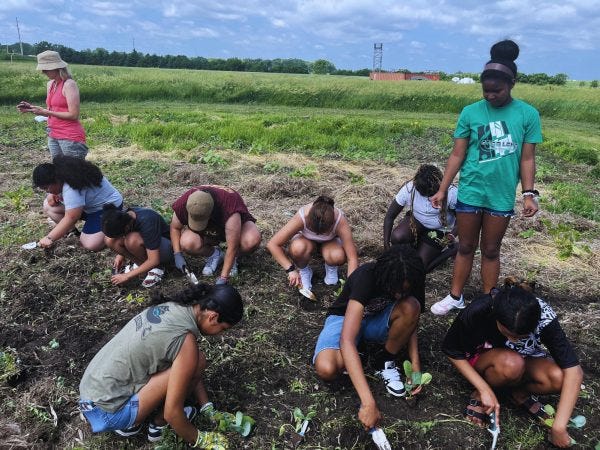
On the other hand, the model is inherently resource-intensive. Success for a program like this depends on consistent nonprofit funding, sustained involvement from adult mentors and student participation outside of school hours — inputs that are not always scalable or easily replicated.
“How do we get the money?” Ramos asked. “A lot of grants. It requires research on that part, and then our fundraising events. We have three major fundraising events and then some smaller ones sprinkled in.”
These constraints mirror broader challenges in Iowa’s workforce system, where growth in the labor force — up roughly 32,400 workers in 2025 — has not fully translated into meeting employer demand.
There are also trade-offs embedded in its design. By limiting adult presence in the café during student hours, the program prioritizes a controlled, youth-centered environment that fosters confidence and skill-building.
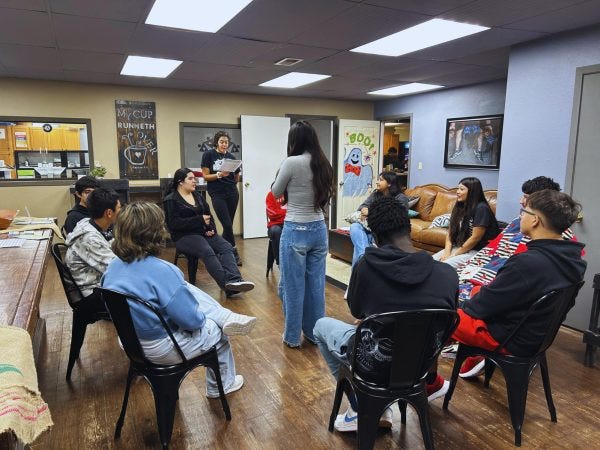
At the same time, that decision may reduce revenue potential and limit broader customer engagement, underscoring the tension between mission-driven programming and financial sustainability.
David acknowledges the challenge honestly. “As of right now, there’s not as many people coming into the café … I’m hoping that they’re able to attract more students.”
IMPLICATIONS BEYOND STORM LAKE
The state’s labor market illustrates a paradox: relatively low unemployment paired with persistent workforce shortages. Even as Iowa’s labor force participation rate approaches nearly 68%, employers across industries continue to report difficulty filling positions, particularly in rural areas.
At the same time, structural pressures — including an aging population and slower job growth compared to national trends — place additional strain on the state’s long-term economic outlook.
Such challenges are already visible across numerous sectors. Healthcare providers, for example, face acute staffing shortages, while other industries have experienced job losses tied to broader economic shifts, reinforcing how fragile workforce pipelines can be in smaller communities.
Programs like Endless Sea Café offer a localized response by intervening earlier — building workforce skills during high school, connecting students to educational pathways, and embedding them in supportive networks and in their community.
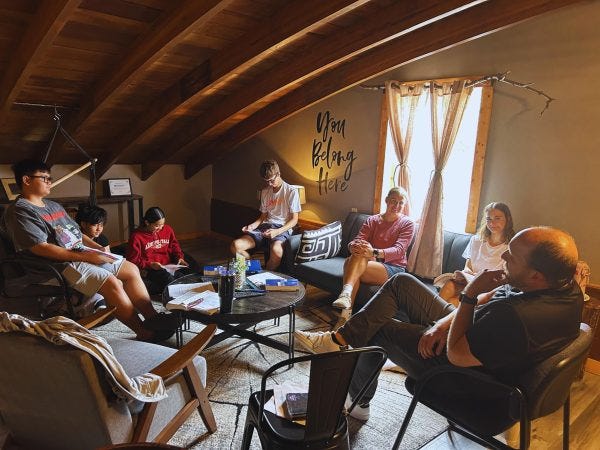
If replicated, models like this could help stabilize Iowa’s workforce pipeline, reduce hiring gaps for local businesses, and strengthen economic resilience in rural communities — particularly in areas where traditional workforce systems have struggled to keep pace with demographic and economic change.
“A SPACE FOR ANYBODY”
The espresso machine finishes as David steps back, ceding control to the student. She watches but does not step in.
The student moves through the process, briefly hesitating before adjusting her hands. The sequence is not seamless but it works. The drink is finished and placed on the counter.
David nods for the student to ring the bell.
At the café, readiness is built incrementally. The Bridge of Storm Lake and its café do not operate at the scale of statewide workforce systems, but they address the same problem at its earliest point: preparation.
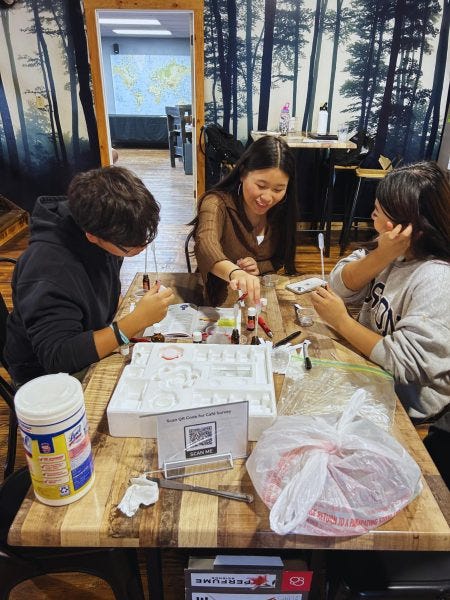
“What’s special to me about The Bridge,” David said, “it’s a space for anybody. I would just like other people to know that it is a good opportunity, especially for all kids. I think they can find their place here.”
For those behind the counter, it begins simply with a measured scoop of coffee.
Fernanda Japa and Elisa Angeles Espinoza are journalists at Buena Vista University’s The Tack. The story’s authors, along with contributor Dania Reyes, recently won first place in the inaugural Iowa Newspaper Association Iowa Business-for-Good Journalism Contest.
The Iowa Writers’ Collaborative Emerging Journalist Corps showcases the work of student journalists selected to participate in the reporting project. The program gives aspiring reporters something increasingly difficult to find in today’s media environment: hands-on mentorship, real-world reporting experience, and a public platform for their work.
Such a positive story, well told. Just what I needed right now. A cross-cultural learning environment that empowers students in association with our higher educational institutions, helping them build community and gain work experience. This program will echo for generations.
Great writing here telling a great story.